

Advances in military aviation capabilities in the 1920s and 1930s were eagerly embraced by some early adopters in the U.S. Navy and Army. These advances and their potential were also probably akin to being the AI of their day — looming, uncertain, yet inevitable.
Army aviation advocates coalesced around the concept of strategic bombardment, while a cadre of Navy fliers and planners quickly grasped the potential of aircraft carriers for mobile striking power.
And while these often junior Navy and Army officers cultivated their causes, the brass of both services were locked in struggles over roles and missions that were turf wars between those services. The Army claimed land-based warplanes as its purview. To the Navy went primarily seaplanes and shipboard aircraft.
Long-range patrol duty could include dropping bombs, depth charges, or torpedoes. The Navy was, in the 1930s, effectively constrained to using flying boats for this mission. In that era, the Navy sought large four-engine seaplanes as patrol bombers, their ordnance typically concealed within the wings or engine nacelles.
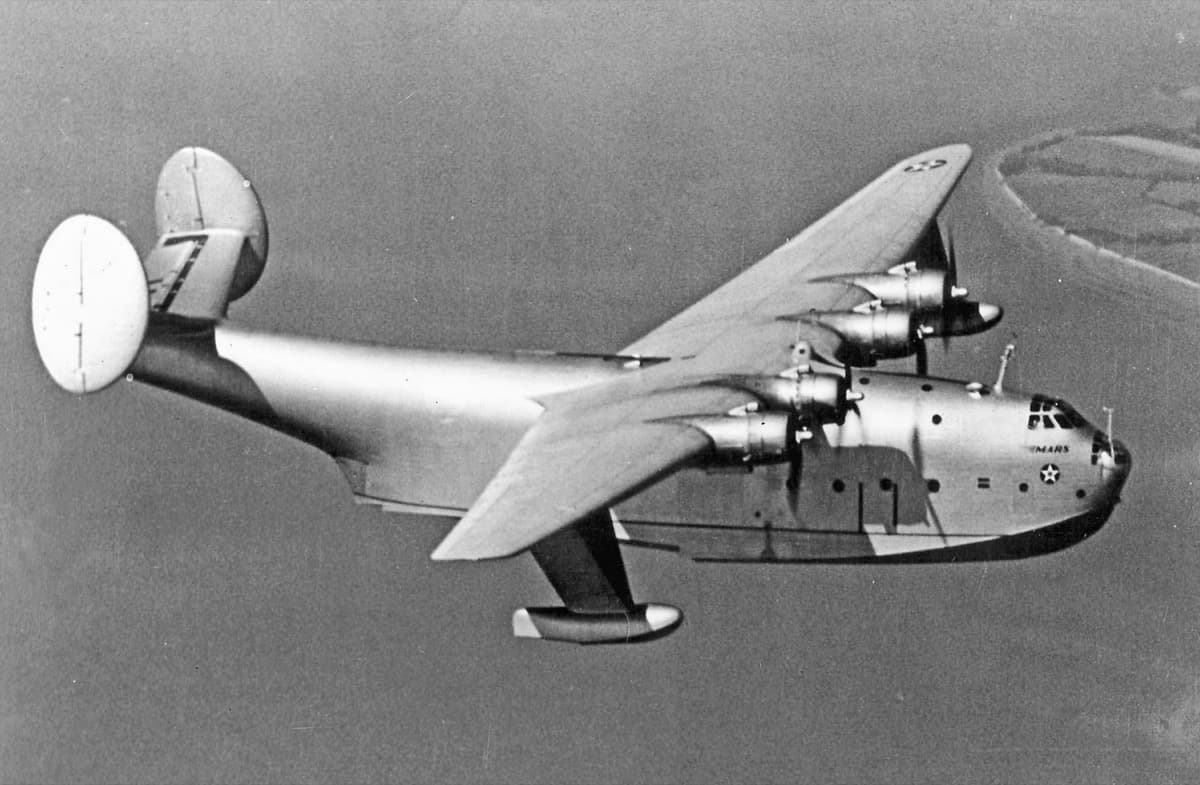
From Martin Aircraft came the huge XPB2M-1 Mars patrol bomber prototype, ordered by the Navy on Aug. 23, 1938. With a maximum range of 4,945 miles, the patrol bomber had a modest service ceiling of 14,600 feet, probably more than sufficient for a seaplane tasked with scanning the ocean for ships below.
As a patrol bomber, XPB2M Mars stowed bombs internally in the center section, with a trolley and rail system to move them out to a bomb bay in each wing for use.
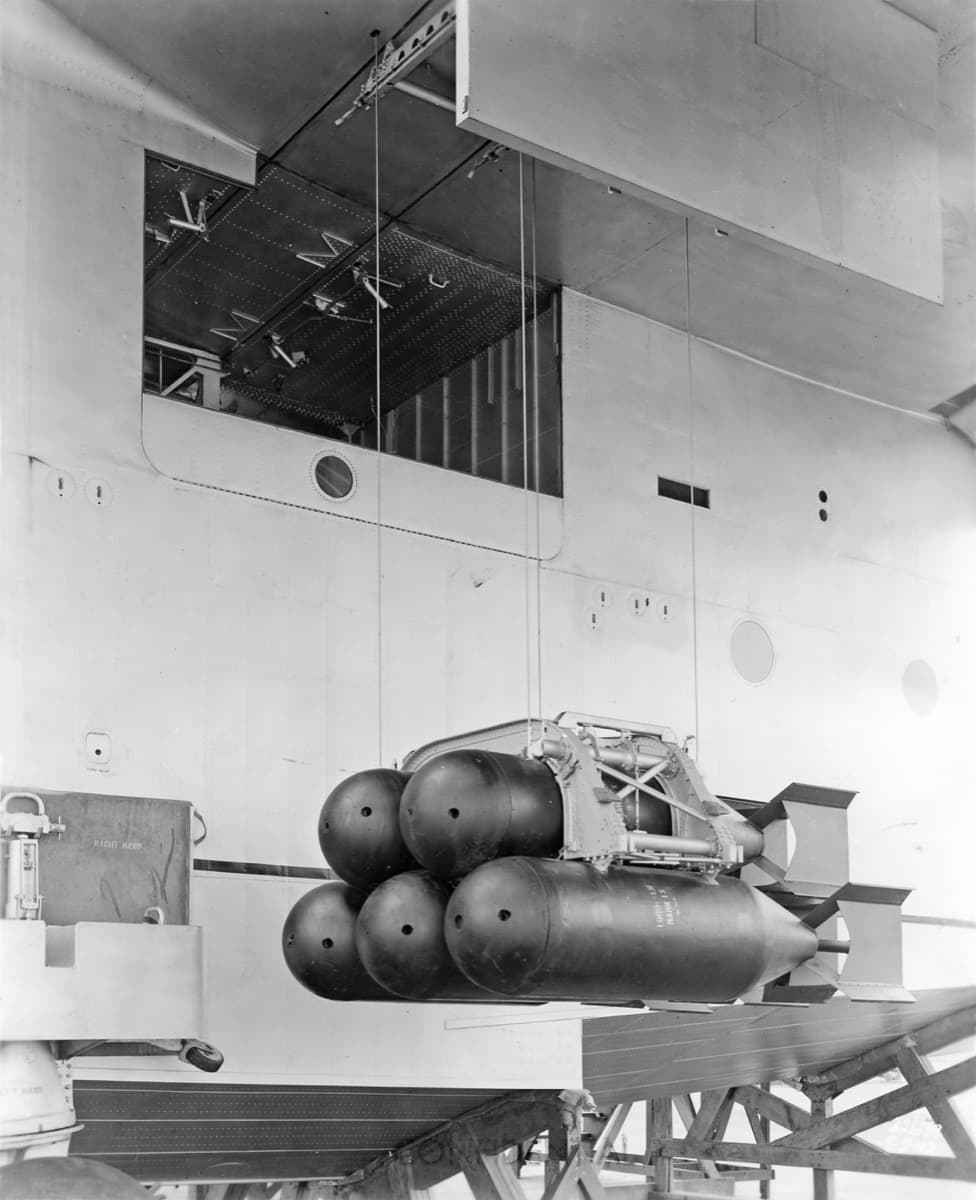
And those wings, spanning 200 feet, were said to weigh 10 tons and were characterized in The Aircraft Year Book for 1942 as being as tall as a 20-story building if stood vertically on a wingtip.
With its mammoth size, the XPB2M Mars bomber soaked up a lot of resources — it is said 3 million rivets were driven into its structure. Delays, including a damaging fire, kept the XPB2M from flying until June 23, 1942, six months into U.S. participation in World War II.
A confluence of circumstances argued against building a fleet of PB2M Mars patrol bombers. Martin’s operationally successful twin-engine PBM Mariner flying boat was deemed a better use of resources — both metal and human — at a time when the Navy was gaining access to land-based long-range B-24s, to be called PB4Y-1 Liberators in Navy parlance.
The XPB2M-1 Mars promised a hauling capacity that was hard to shelve, so Martin revamped the former patrol bomber to become the XPB2M-1R transport, without armaments. On Nov. 27, 1943, the XPB2M-1R was received by Navy squadron VR-8, and three days later the Mars made a record-setting non-stop flight of 4,250 miles from Patuxent River, Maryland, to Natal, Brazil, carrying a 13,000-pound payload.
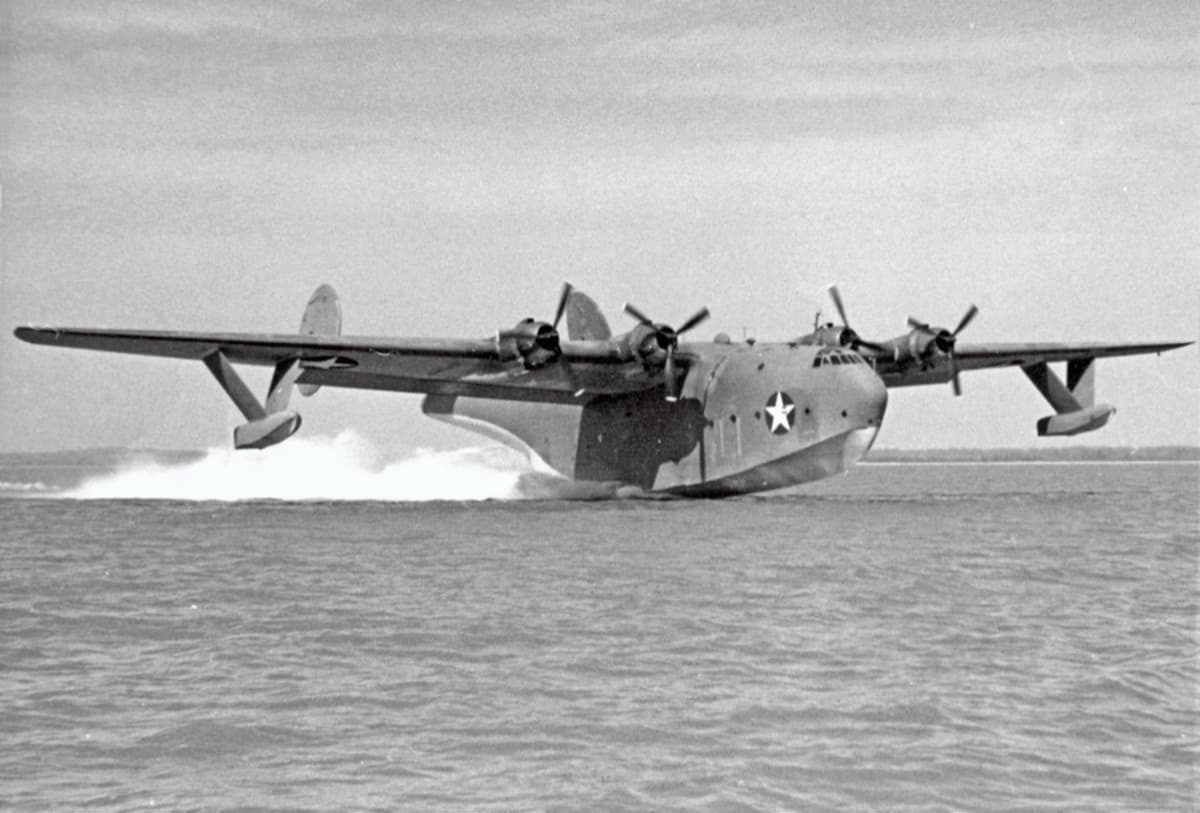
By January 1944, the Mars prototype was on Pacific service with Squadron VR-2. The huge flying boat regularly cycled from Naval Air Station Alameda in the San Francisco area to Honolulu during the war. Its priority cargoes included tons of plasma during the campaign for Iwo Jima.
The bomber that wasn’t, the prototype Mars made a big splash as a large transport. In January 1945, with the war still raging, the Navy contracted with Martin to build 20 giant transport seaplanes based on the Mars prototype, but with specific upgrades and mission equipment changes.
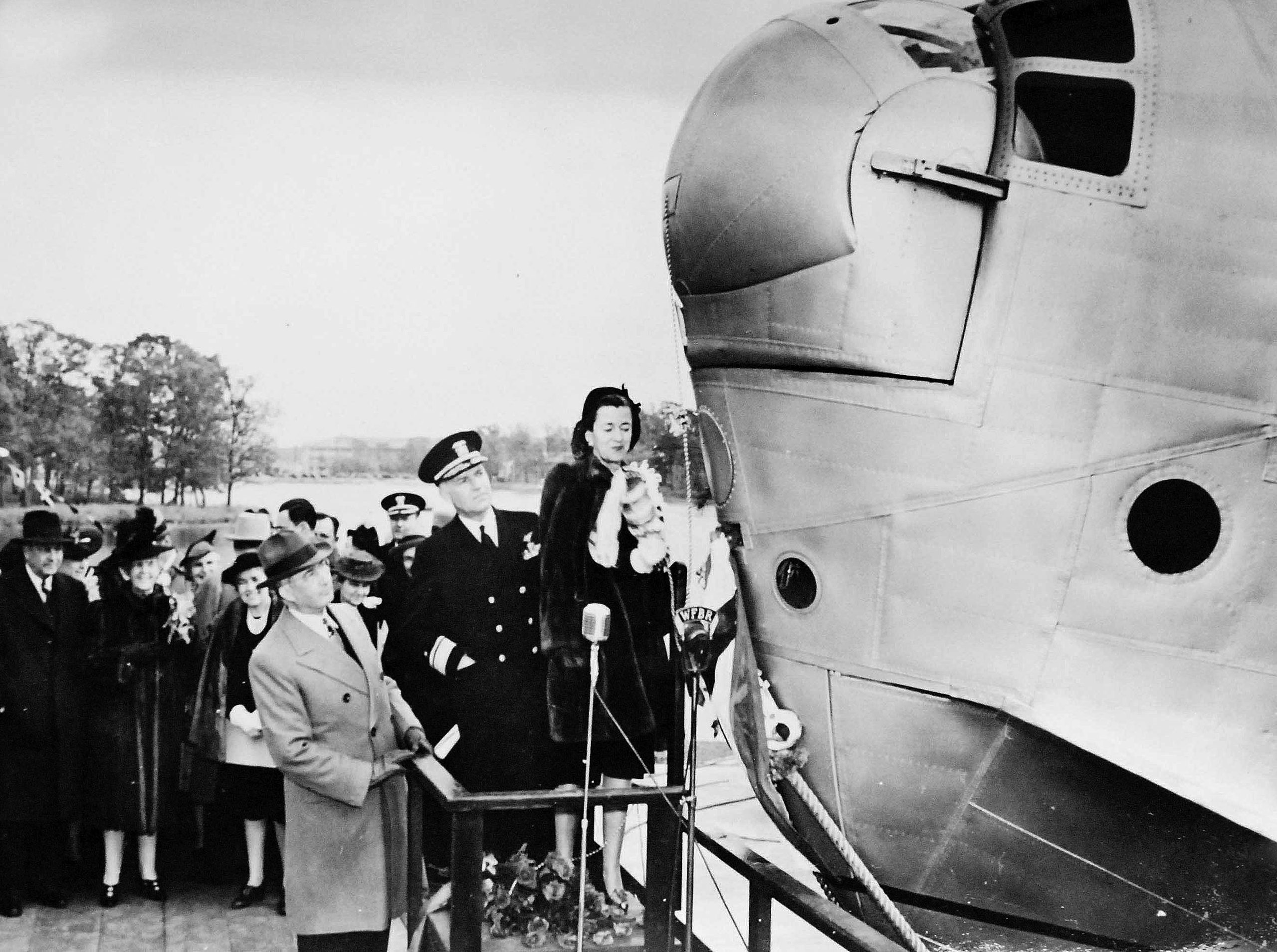
To be designated JRM, these new aircraft featured a large single fin and rudder instead of the prototype’s canted twin tails. A purpose-built transport nose configuration lacked a turret, and the configuration of the bottom of the hull was tweaked to provide even more internal capacity in the JRM. Six were built before the war’s end terminated the contract.
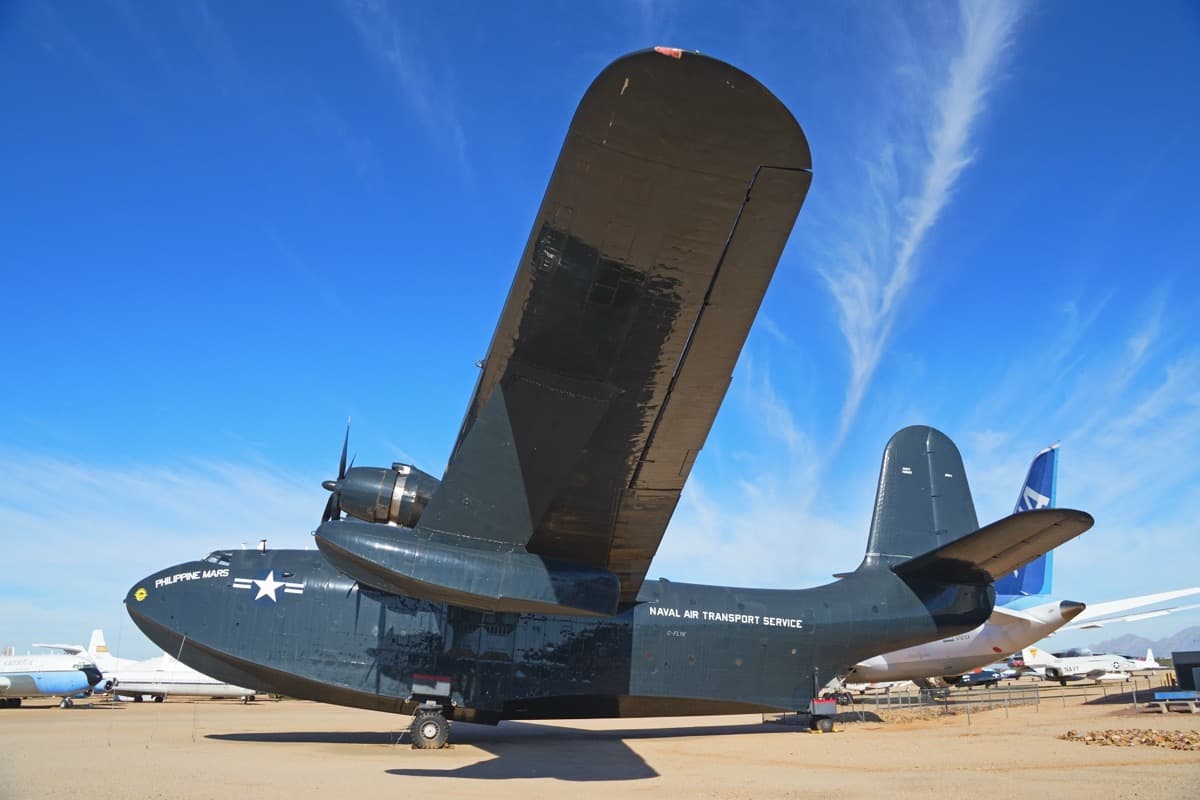
The XPB2M prototype flew for the Navy until March 1945. The following month it returned to the Martin plant in Maryland where it served in crew and maintenance training until scrapped in 1949.

We had two of them at Sprout Lake for years as part of the Coulson tankers group here in BC.
It was a treat to see them lumbering off the lake and must have had a take off speed of about 15 MPH from the looks of them. Wayne let them both go a year ago. One to the US and the other to the museum in Victoria. Part of our history here in British Columbia as well.
Back in the 70’s I met a WWII vet who told me he used to climb out in the wing and work on the engines while in flight in the Martin Mars. He didn’t tell me there were bomb bays in the wings! Thanks for the pictures and article that shows how immense these aircraft were.