

An Oct. 2, 2026, post by Garrett Gleim on the Gleim Aviation website caught my attention. From Garrett’s post:
Avgas does sell at a premium over motor gasoline at the refinery gate, but that premium has to cover dedicated tankage, specialized handling, product liability, and a batch-certification process that ordinary gasoline never needs. Typical gasoline margins are thin to begin with, so when gasoline profitability widens even modestly, the math can tip: That same barrel of alkylate is worth more staying in the mogas pool than going into a specialty product that represents a rounding error of total output.
I wasn’t aware of those nuanced details.
And this:
Here’s the part that catches most pilots off guard: Avgas isn’t produced continuously. It’s built in scheduled batches, blended, and certified in discrete runs rather than flowing off the line around the clock. If a refiner looks at a wide gasoline crack spread and decides the timing is bad, it can simply not schedule the next avgas campaign. There’s no press release, no announced closure, no dramatic news story. The batch just doesn’t happen, and the gap doesn’t show up until tanks downstream start running low.
Count me as “off guard.”
And what the heck is a “crack spread?”
According to Garrett, “A crack spread is the difference between crude cost and the value of the finished products made from that barrel.”
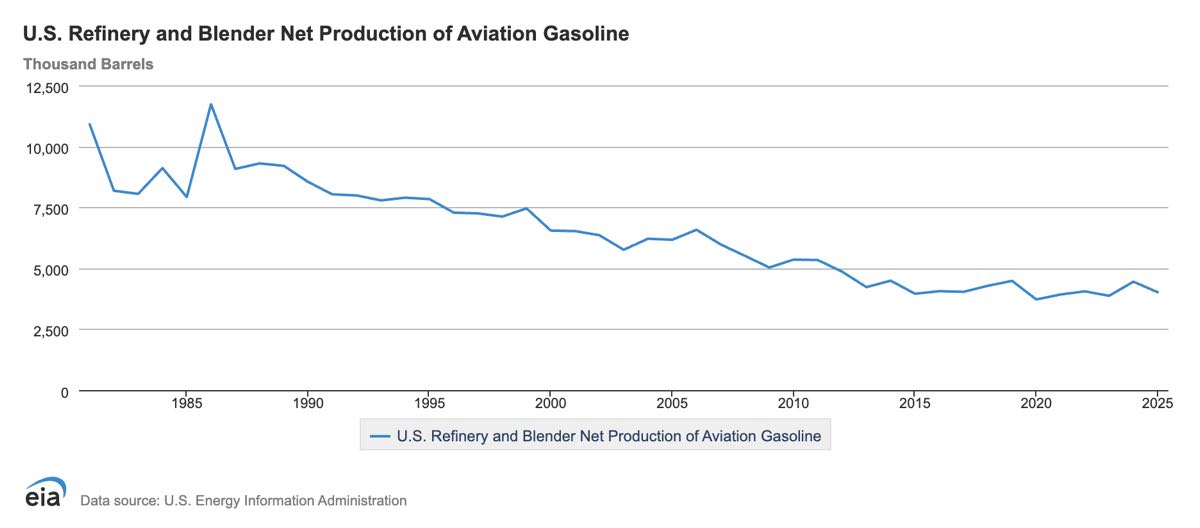
The most interesting part of Garrett’s post was this chart (above). Garrett included 2005-2025. This version, which is a screenshot from the U.S. Energy Information Administration (EIA) website, goes back to 1981.
Generally, I’m a positive person, but this chart looks like we’re flying into an area of ever lowering overcast cloud deck. Thankfully the X axis isn’t climbing up to meet us.
Be sure to read Garrett’s full post here.

Leave a Reply