

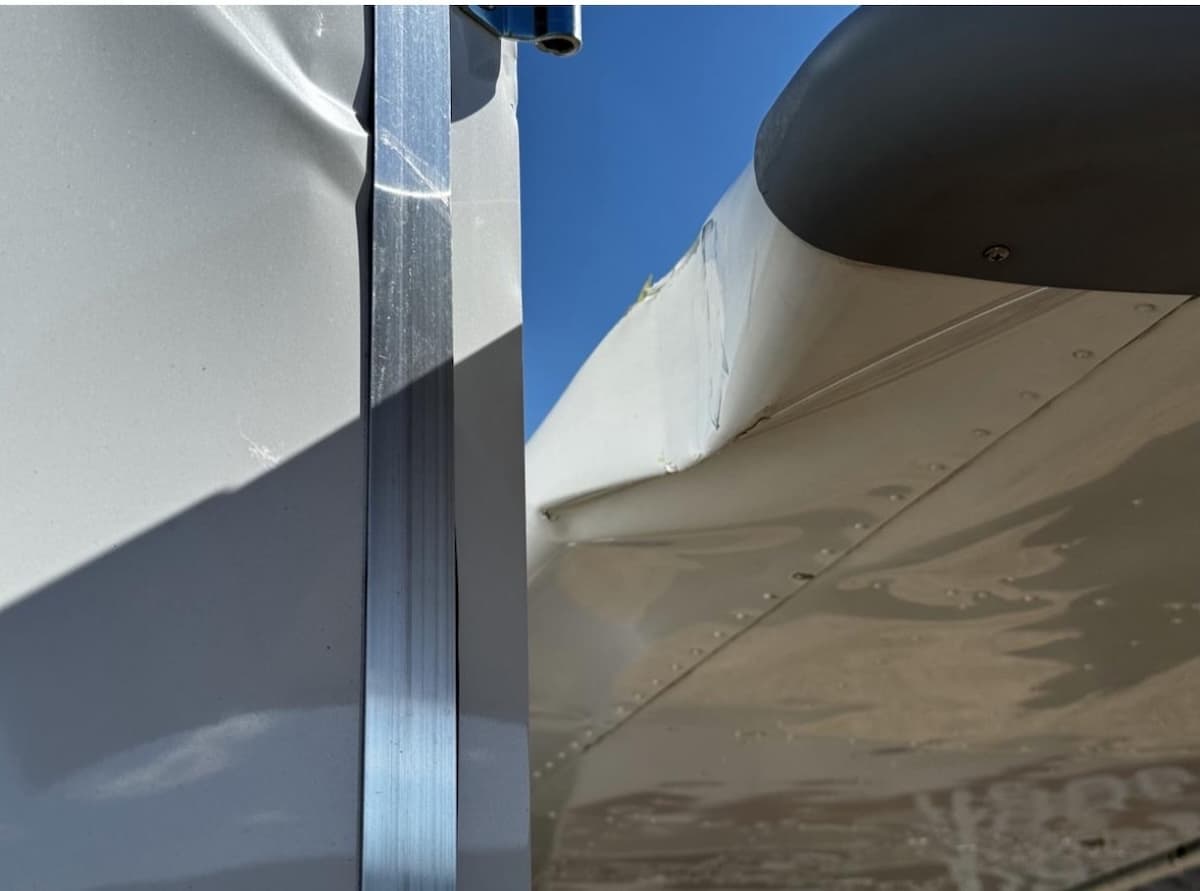
The pilot reported that, while taxiing the Cessna 182P at the airport in Stanley, Idaho, he encountered gusty wind conditions.
He told investigators the propeller produced a significant amount of dust while taxiing, which then surrounded the airplane, limiting his visibility. At the same time, a strong gust of wind turned the airplane.
The left wing hit a parked trailer near the taxiway, which resulted in substantial damage to the left wing and fuselage.
Probable Cause: The pilot’s loss of directional control in reduced visibility conditions due to a wind gust, which resulted in a collision with a trailer.
To download the final report. Click here. This will trigger a PDF download to your device.
This August 2024 accident report is provided by the National Transportation Safety Board. Published as an educational tool, it is intended to help pilots learn from the misfortunes of others.
This accident is an important reminder that runway safety extends far beyond the runway itself.
Too often, the focus is on the runway surface, while the surrounding environment receives far less attention. Loose dust on shoulders, untreated access roads, parking areas, taxiways, and adjacent surfaces can all become airborne in windy conditions, reducing visibility, contaminating engines, and creating unnecessary hazards during take-off and landing.
A well-maintained runway is only as safe as the environment around it. Treating the shoulders and surrounding infrastructure to control dust and erosion should be considered an integral part of airfield safety, not an optional extra.
Taking a holistic approach to airfield maintenance protects both aircraft and pilots while improving operational reliability in challenging conditions.