

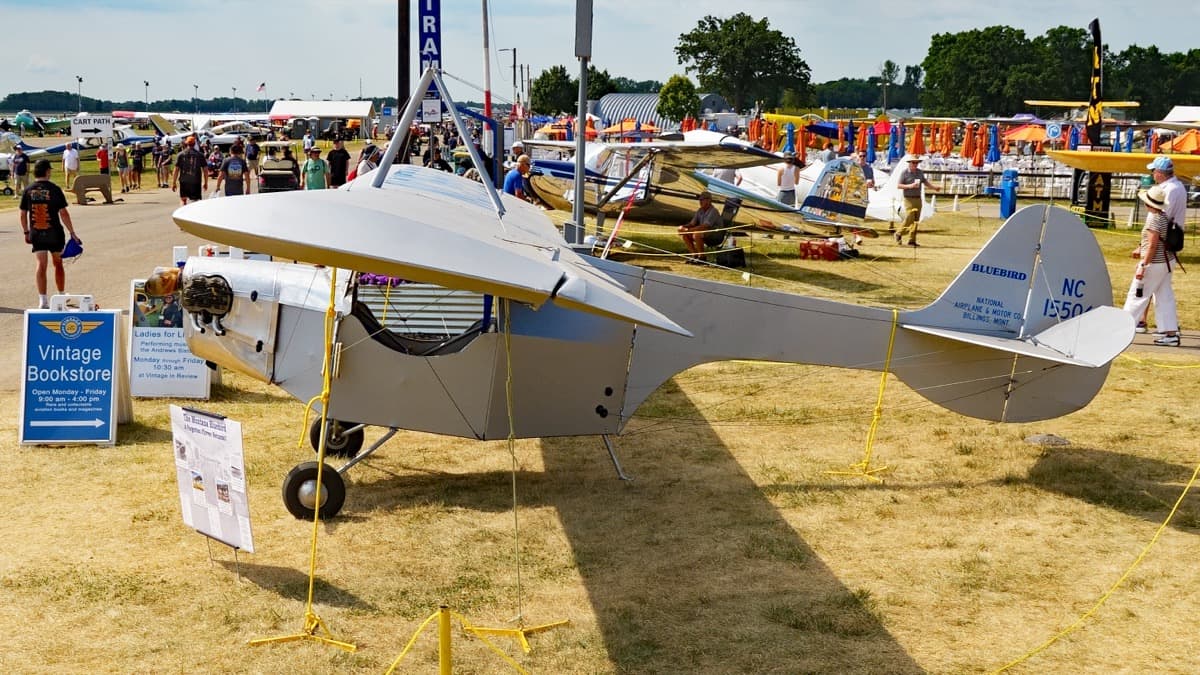
Montana’s Tim Talen has breathed life into the extinct Montana Bluebird. No, he’s not a paleontologist trying to clone a long-gone woolly mammoth. But his perseverance and critical thinking has accomplished a rival task in vintage aviation.
Talen was happy to stand beside his diminutive two-place Bluebird in the Vintage area of EAA AirVenture Oshkosh 2026, where he talked about the aircraft’s sometimes-quirky design features and its legacy as Montana’s only certified production aircraft.
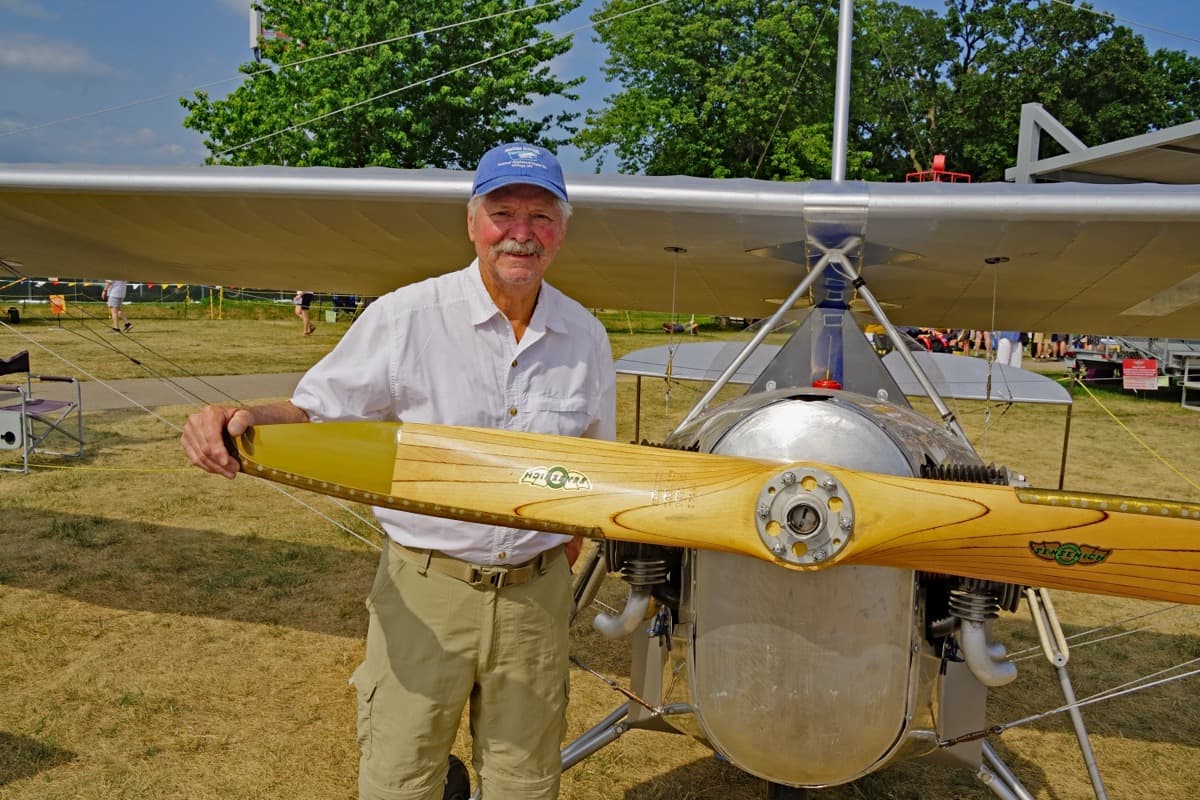
The vintage aircraft at AirVenture can entice a closer look by virtue of their rarity, quirkiness, and beauty. For the Montana Bluebird, two out of three ain’t bad. What makes the Bluebird especially intriguing is its birthing process, starting with some vintage photos, a three-view drawing, some printed dimensions, and an available N-number from a Bluebird still on the federal records.
Talen, who has restored many vintage aircraft, used his experience, along with logic that’s hard to fault, to take the meager evidence of the Bluebird and scale out an airplane to build.
One scrap of vintage printed information gave the Bluebird’s wing span, chord, and airfoil. Pretty easy to lay that out, spacing ribs to match their evidence from photos of the Bluebird.
More printed material described engineering details like the area of the ailerons, so he computed that number and figured out how deep and wide the wing cutouts must be to accommodate ailerons of that size between logical wing rib placements. Since Frise ailerons that tackled adverse yaw were in vogue when the original Bluebirds were built in the last half of the 1930s, Talen felt justified in hinging his Bluebird’s ailerons in the Frise style.
The fuselage is a creative exercise in steel tubing, and the vintage rebuilder employed standard tube sizes of the era to create a logical welded fuselage skeleton for his reborn Bluebird.
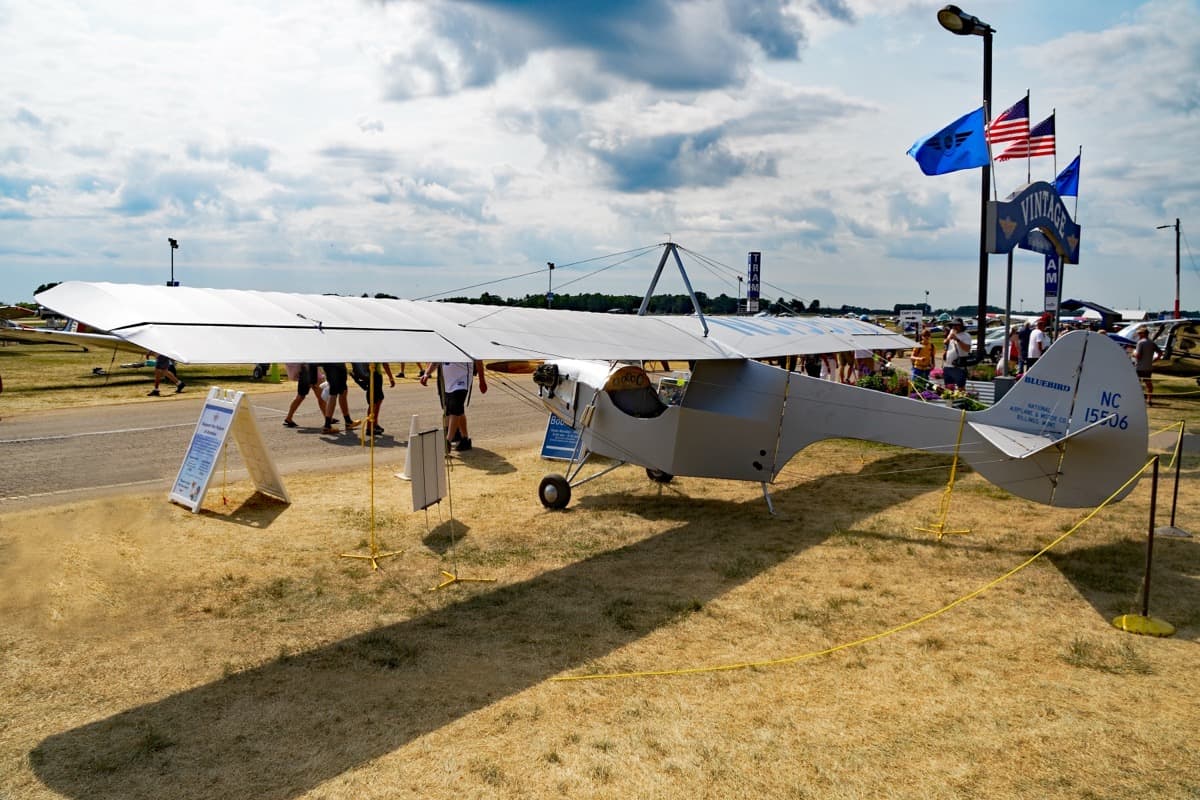
The Montana Bluebird and its antecedents were expressions of the flying flivver concept of the era — an effort to make a simple, uncomplicated, and inexpensive machine to get more people flying.
The originator of the Bluebird, Arthur B. Green, designed a fuselage pod with cozy side-by-side seating. The pod narrows quickly behind the seat, and the aft fuselage is nothing more than a single-wide truss of tubing with no volume to it, ending in a similarly narrow vertical fin, rudder, and horizontal tail. That skinny aft boom attaches to the fuselage pod via brackets looking very much like door hinges, with bolts replacing the pins of typical door hardware.
Talen says the appearance of the aft fuselage, looking like it should pivot around the points where it attaches to the crew pod, gave rise to speculation among AirVenture visitors that the whole aft fuselage might be movable as a form of rudder trim. Not so, he said, explaining the Bluebird’s rigging wires keep the aft fuselage tightly held in place.
The Bluebird is from an era when bracing could be accomplished with an overhead kingpost atop the center of the wing, with taut wires running everywhere needed to keep the structure intact under load. No wing struts are in the design.
Talen’s Bluebird is just a bit lighter than its 1935 iteration, weighing in at only 415 pounds thanks to his careful routing of the wooden wing spars.
“It’s a simple airplane, really easy to build,” he says.
The Bluebirds originally flew with versions of the two-cylinder National 35 motor that lent itself to the name of the Bluebird’s manufacturer, the National Airplane and Motor Company of Billings, Montana. Even a veteran parts procurer like Talen does not have a National motor, so a compatible Continental A-40 was chosen for his reborn Bluebird. Sometimes promoted as a 40-horsepower engine, Talen says the A-40 really is rated at 37 hp, sufficient for the Bluebird.
When it came time to fabricate a cowling for the Continental, vintage photos of the Bluebird showed the style, with an elongated nose bowl and side panels with neatly edged cutouts.
The Montana Bluebird of 1935 rested on a pair of no-longer-available 16.7×3 tires, so Talen turned to a pair of similarly diminutive nosewheels for the mains on his Bluebird. A simple tailskid attaches to the rear of the crew pod, making for a compact footprint on the ground.
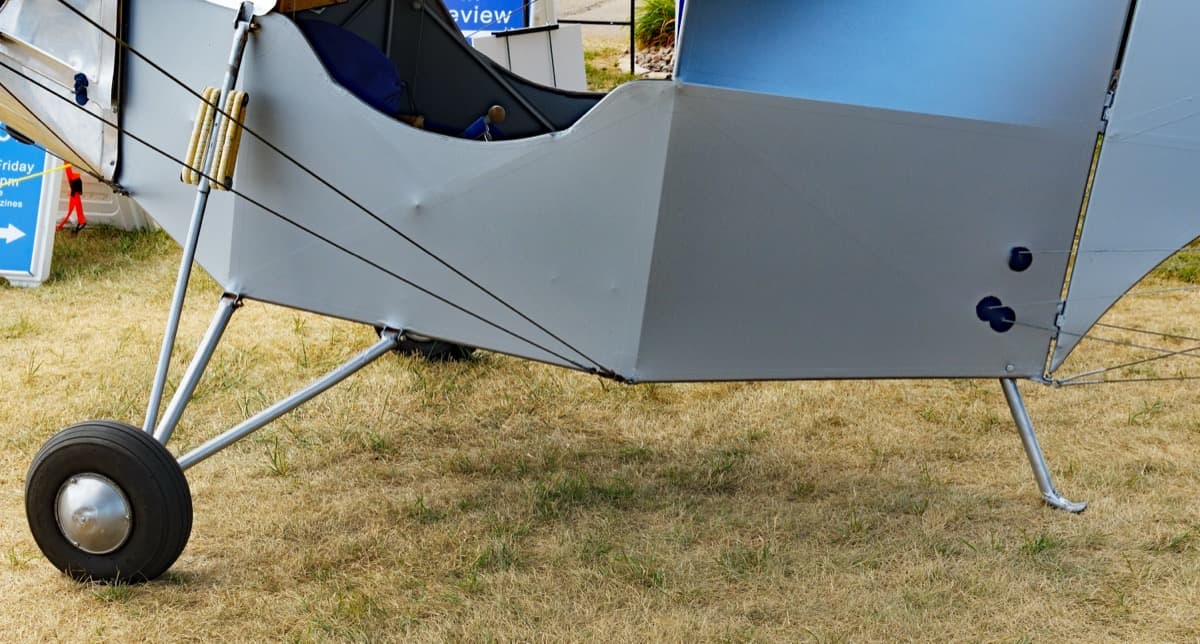
At the end of July 2026 when I chatted with Talen, he had just finished taxi tests before trailering the Bluebird to Oshkosh. As of this writing, the Bluebird has not tested its wings, but Talen envisions that small three-point footprint will call for “a little bit of a wheel landing” before allowing the tailskid to contact the ground.
When the date of the first flight arrives at his Boulder, Montana, airstrip, Talen is reckoning on a top speed of 85 mph, cruising at 75, and landing at a mild 27 miles per hour.
Once that flight takes place, he says he wants to have some fun playing with the Bluebird before it likely becomes a museum display.
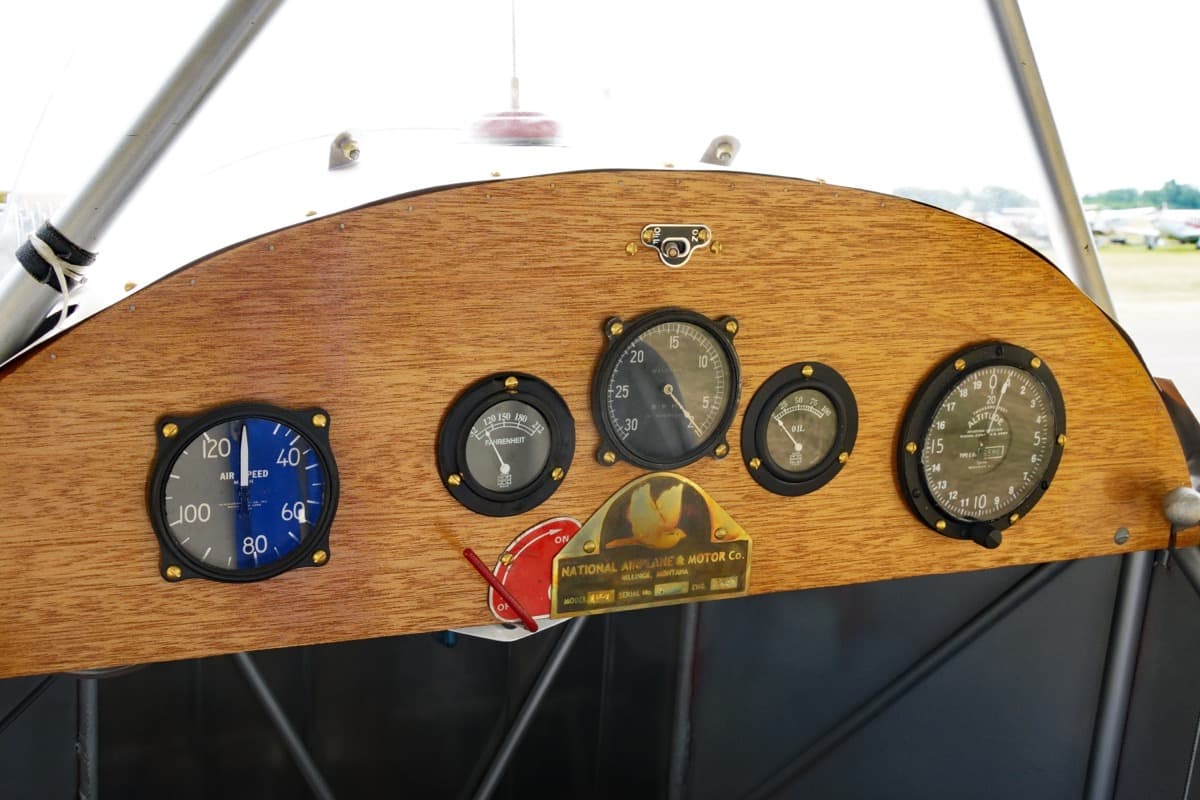
The National Airplane and Motor Company bounced around southern California, Oklahoma, and Kansas before landing in Billings, where a second-story warehouse served as the manufacturing plant. Tim figures the upstairs construction site was handily accommodated by the tiny Bluebird, which disassembles into movable and lightweight parts. His research indicates only three Bluebirds were built in the Montana warehouse. One previous Bluebird was built when the company’s address was Kansas City, Kansas.
Talen’s journey in researching and recreating a Bluebird has spanned about a decade. While he did all the welding and shaping of the cowling, he gladly accepted help with the fabric covering.
“I was able to bribe some of my friends,” he says, explaining he offered legendary Montana fly fishing if they would stop in to help.
As I talked with Tim Talen about his Bluebird at Oshkosh, I came away with more than a story about an airplane. I came to appreciate a restorer who patiently applied logic and the wisdom born of his many years of working on vintage aircraft to recreate a 1935 airplane from austere information, backed by his knowledge of that era’s construction methodologies.
And that’s what a gathering like AirVenture is all about.

Leave a Reply