

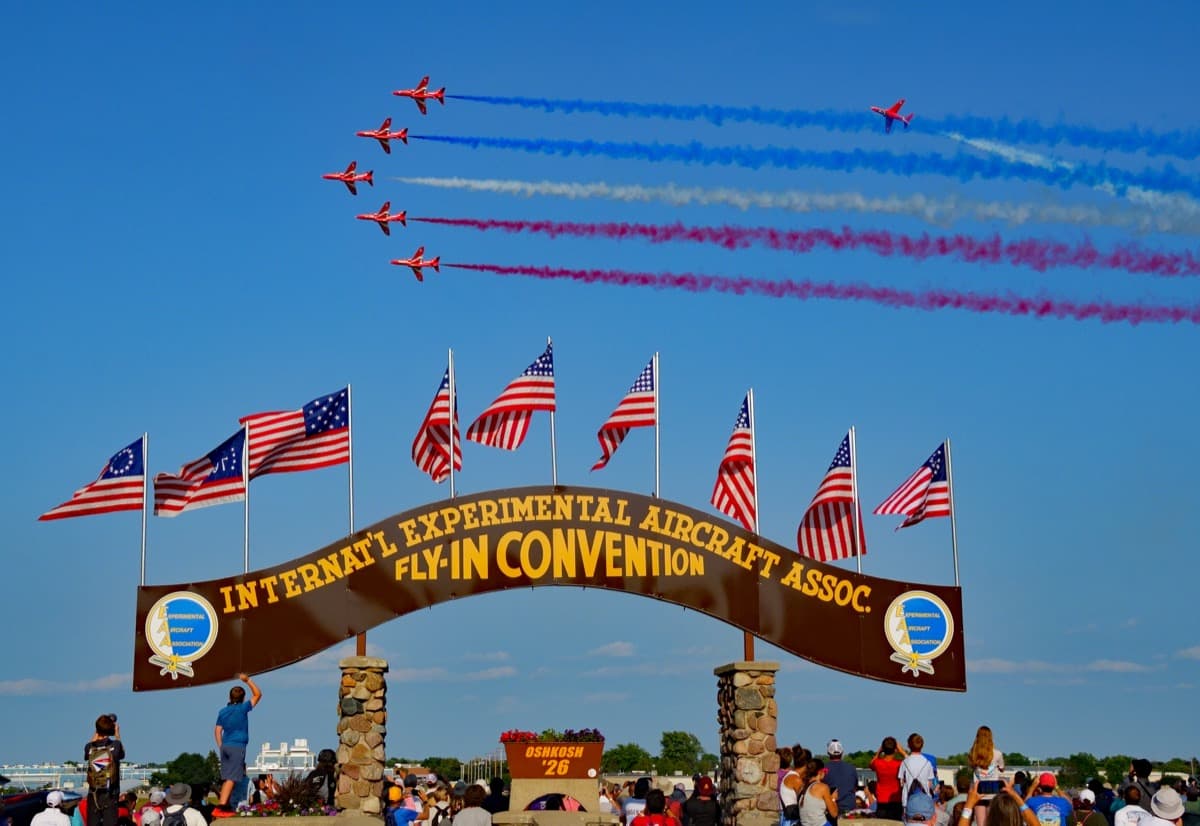
Not everybody arrives at EAA AirVenture Oshkosh in a warbird, business jet, vintage ragwing, or a hard-working GA mount. The incredible tally of more than 10,000 aircraft during AirVenture 2026 is dwarfed by attendance numbered at more than 700,000.
That means many of us migrate to Oshkosh by other means. Mine is a pick-up truck that is just six years shy of qualifying for antique tags.
My penchant for making YouTube videos en route is exceeded only by my love of road trips. Yeah, I know — all the stereotypes about dogs loving car trips apply to me. Except for the part about sticking my head out the window and letting the wind flap my ears.
The journey to the 2026 show included everything from en route planespotting to making the acquaintances of genial people along the way, spotting wildlife in the Big American West, and embracing how much fun and adventure we have in the U.S. whenever we step out beyond the 9-to-5.
The Journey Begins
I slipped out the door at 0-Dark-30 on Friday, July 10, building in time for a visit with friends in Bozeman before tooling across Montana, Wyoming, South Dakota, Minnesota, and finally smoky Wisconsin.
How does a Plane Nerd (yeah, my wife Sharon calls me that — I have to own it) cruise Idaho? By stopping in at Pocatello, of course, to check in on the resident air tanker status (DC-10 present and accounted for) and pausing long enough to inspect the airport’s F-101B Voodoo jet fighter on display.
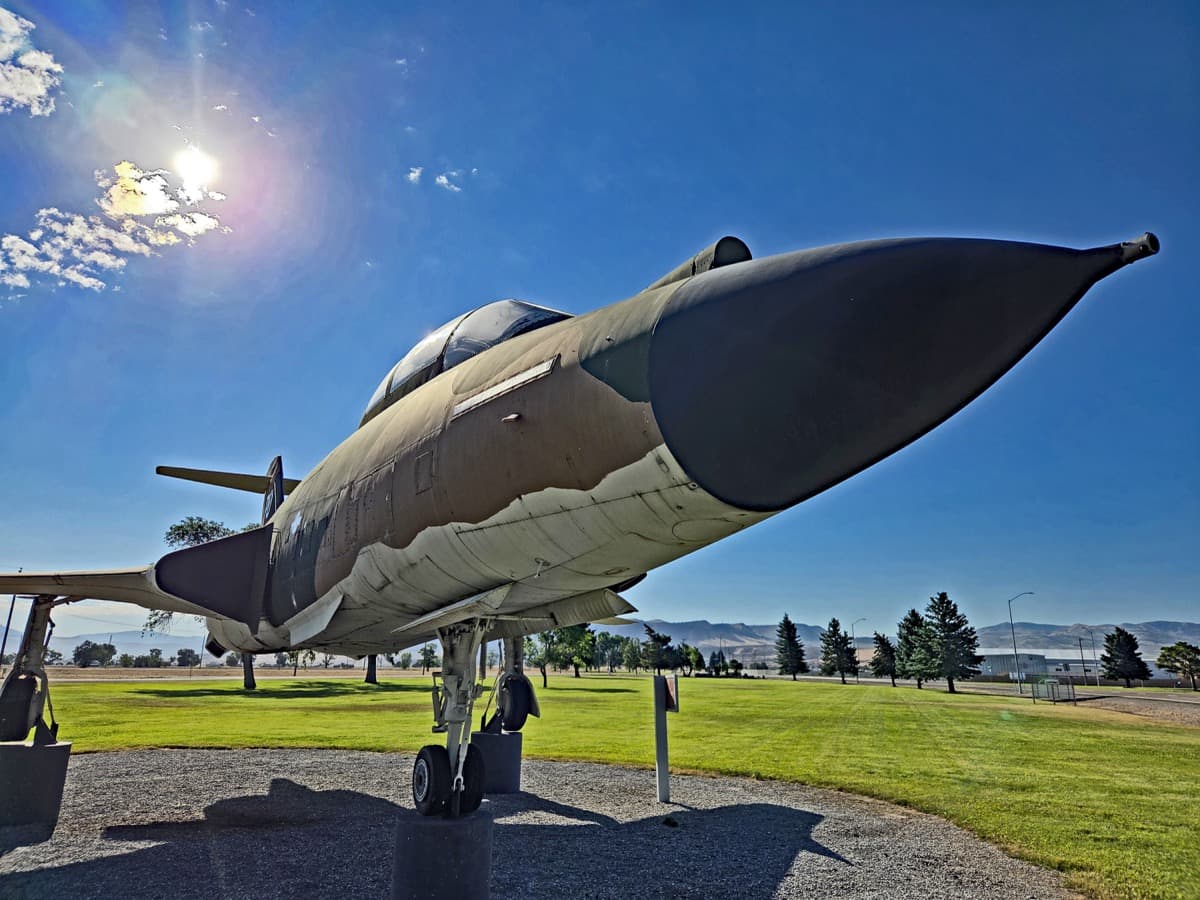
During the Cold War years, municipalities obtained loan agreements with the Air Force and Navy for available surplus aircraft that could be hoisted on a plinth in a city park, airport, or other public space. Over the ensuing decades, some have fared better than others, but they all speak to the third or fourth wave of airmindedness that swept over the United States ever since Charles Lindbergh’s electrifying 1927 flight set the national tone.
Voodoos like the one in Pocatello stood alert against potential polar incursions by Soviet bombers for decades until the F-101s retired in the 1980s. Other single-seat photo reconnaissance models used their two massive Pratt and Whitney J57 after-burning jet engines to scream along at treetop level, grabbing photographic evidence of targets, before and after destruction.
A Plane Nerd can have an active treasure hunt everywhere, looking for these vintage gems that speak to an earlier era in airpower. The amount of time spent ogling these icons may need adjustment if there are non-Plane Nerds in the car.
Saturday, July 11
Sat down with great leftover pizza from last night when a louder-than-airlines jet ripped overhead in Bozeman. Pizza back in the fridge. Camera in hand. Parking by the airport fence. Like-minded Plane Nerds have convened as Navy F-35s take off. Great, but outnumbered by jetliner after jetliner, bizjet after bizjet.
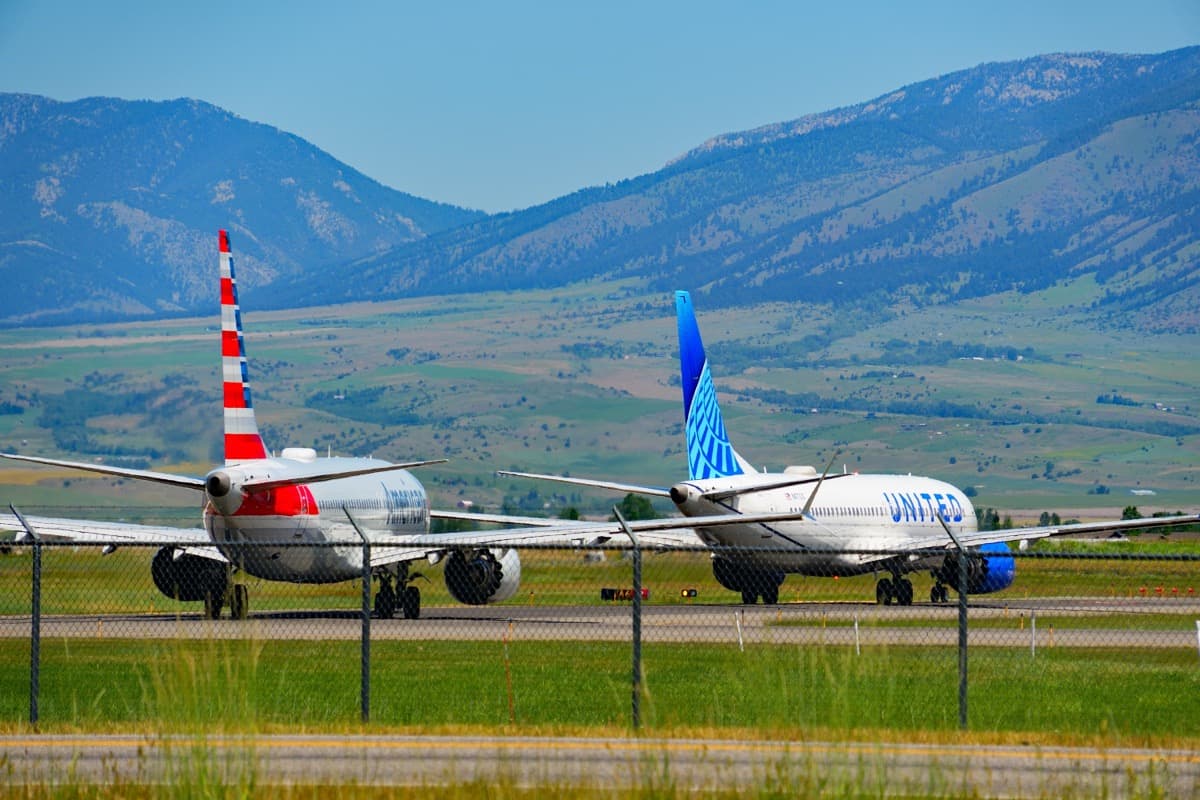
The local observation is that Bozeman, considered the gateway to Yellowstone and Big Sky, sees folks like most of us step out of arriving 737s, while folks not like most of us have a Gulfstream or Dassault Falcon deliver them.
Tuesday, July 14
The road from Bozeman wends over mountains and into a broad valley with cottonwood riparian zones before quietly passing the site of the battle at Little Bighorn. Even a Plane Nerd can hold more than one thought at a time, and reflection in that historically steeped region comes quietly as the truck rolls along.
Wide-open Wyoming points the way to South Dakota. From the Interstate, Rozet, Wyoming, offers a shimmering view of dozens — perhaps hundreds — of slumbering diesel locomotives painted in various operational and experimental color schemes for railroad giant BNSF. It’s a resting place for surplus engines, evidence of the ebb and flow of commerce on this western corridor.
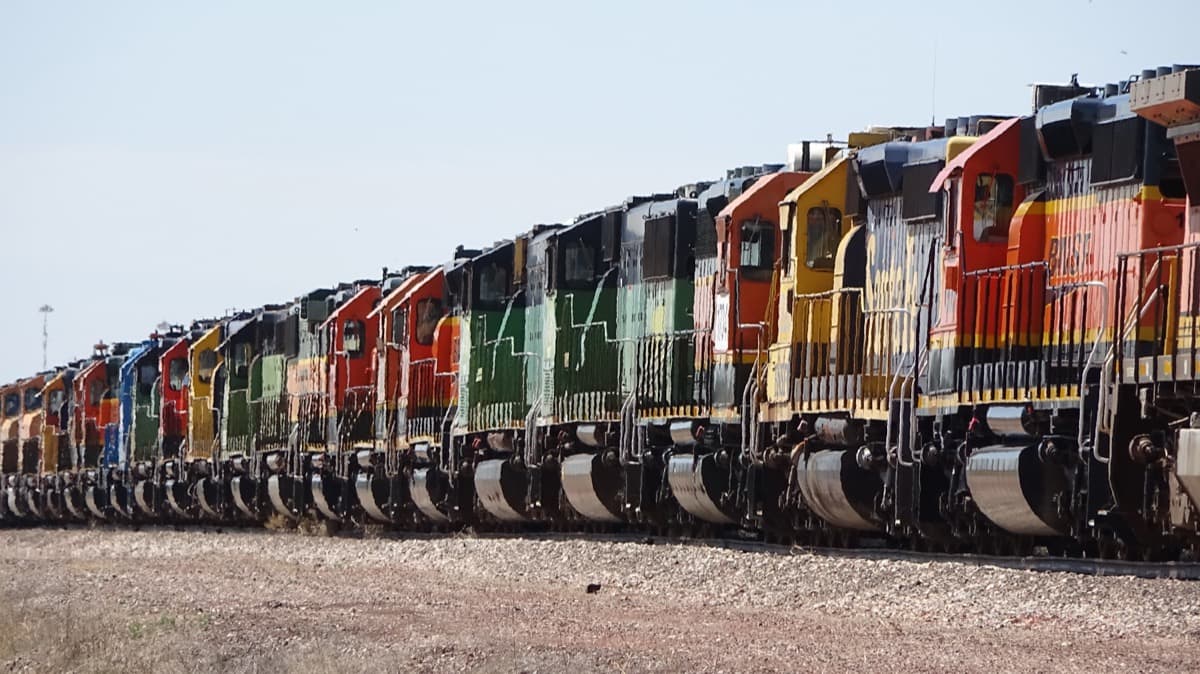
The diesel line-up has existed for years, looking like the railroad equivalent of the airliner storage lots in the southwest desert.
Climbing into the Black Hills, a timeless stand of cottonwoods obscures a dappled and fleeting glimpse of a bull elk, its rack only briefly differentiated from the trees’ limbs. As sweet as it would be flying to Oshkosh, some of America’s grandeur only reveals itself from ground level.
Wednesday, July 15
It’s a long cruise across South Dakota today. Time to think and plan out story and photo opportunities for AirVenture. A cheap FM plug-in station rests in the truck’s round cigarette lighter electrical receptacle, playing tunes from a USB drive into the speakers. Steppenwolf, Julie London, Aaron Copland, Elle King, Miles Davis, Little Big Town, and Gordon Lightfoot pass the time with me. But no Neil Young. I must draw the line somewhere.
A hot stretch of the limbs outside my truck in Chamberlain, South Dakota, gives me the chance to survey a long-dormant Lockheed T-33 Shooting Star jet trainer, displayed in Veterans Park. Its aluminum has the crusty patina of decades in the weather.
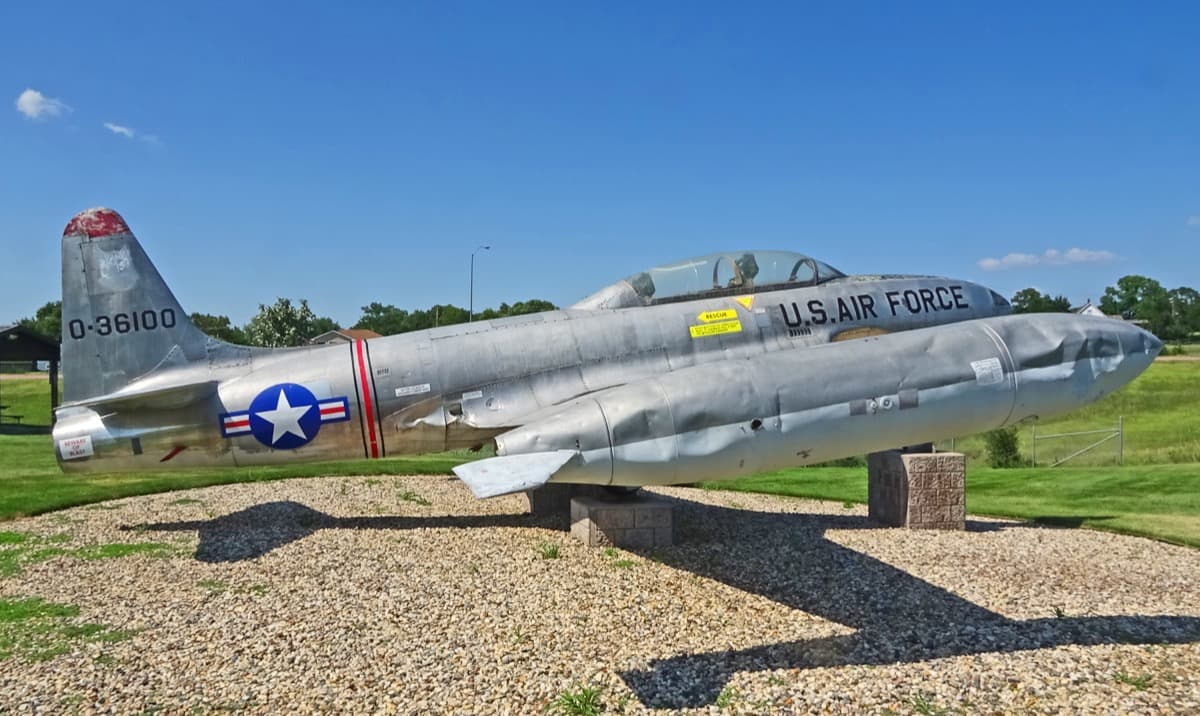
The paint is peeling, dents have resculpted the wingtip tanks, and a telltale crushing of the aft wing-fuselage aluminum fillets tattles a tale too common for T-33s — they get sling-loaded with a strap that is more than a match for the thin skin in that location.
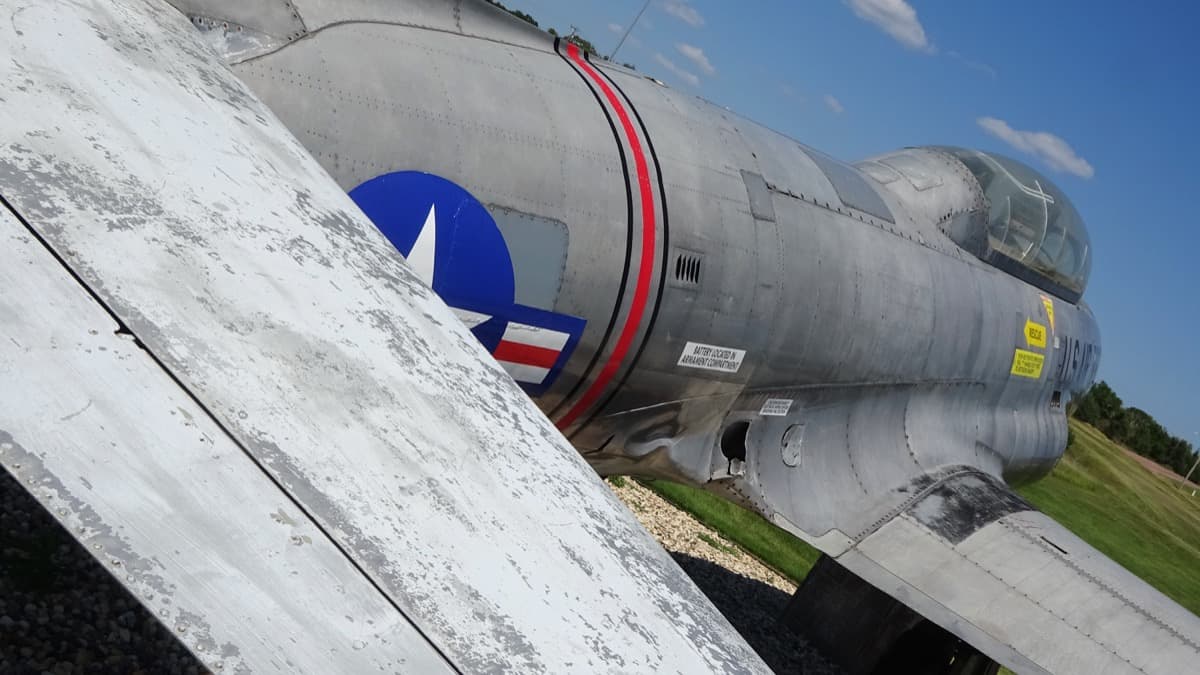
This T-33 may have served at one time out of Tyndall AFB in Florida. These two-seat jets trained decades of Air Force pilots, and then served as utility, proficiency, and bogey aircraft into the 1980s.
Pondering this Shooting Star in the Dakota sun, you can see its all-aluminum construction reflects the best tenets of World War II techniques — a durability that carried T-33s through service life extension programs that stretched their flight hours beyond original estimates.
Dinner in Mitchell, South Dakota, includes the what-are-the-chances reveal that the waiter and his son graduated from the same high school in Washington state as I did, with decades separating us.
What brings me to Mitchell? I proudly reply that I am on my way to Oshkosh, Wisconsin, to report on the largest air show in the world. A satisfying meal later, as I depart the front door, the waiter hollers, “Good luck with your…event,” his voice betraying the fact that not everyone is ate-up with Oshkosh like I am.
Thursday, July 16
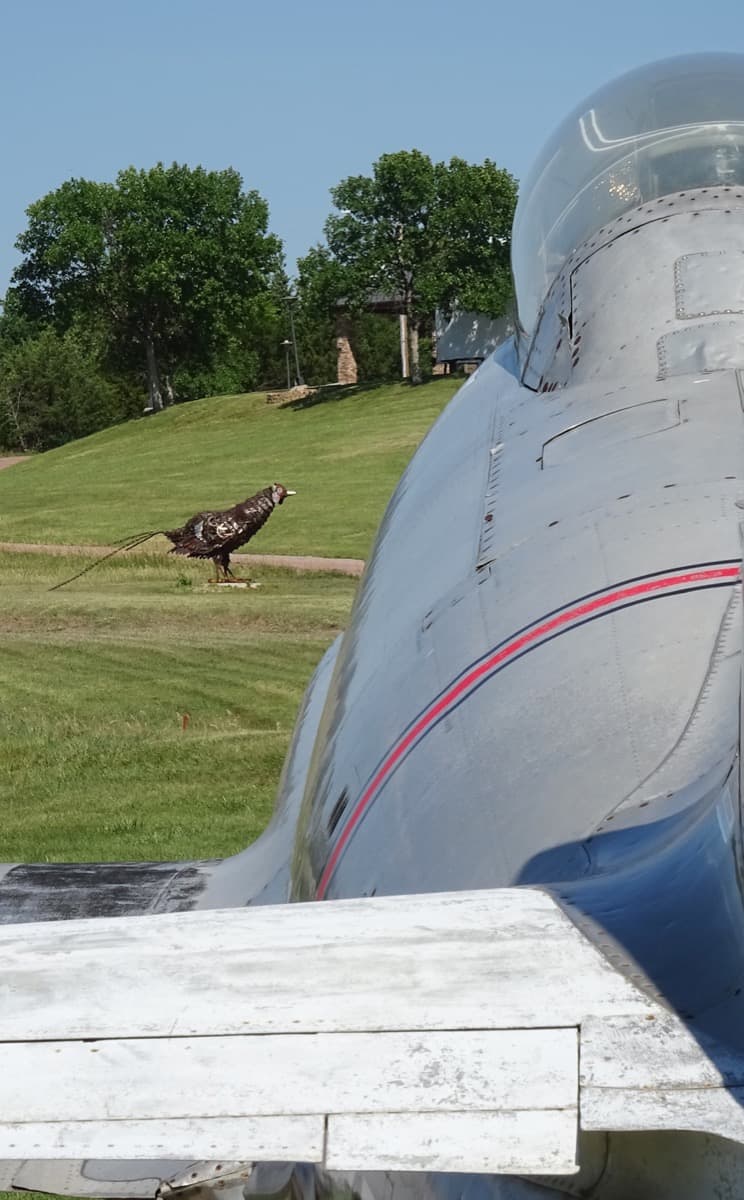
Sometimes sunny, sometimes hazy, the skies across Minnesota paint a slowly deteriorating picture as I head eastbound. Cornfields are lucrative spots to find crop dusters to video, but the pickings are lean this morning. Even the pheasants are walking.
I drop off Interstate 90 and run parallel on farm roads, jinking south occasionally until I touch Iowa, and then back north and east with the roads. I approach a man, sitting tall in the saddle under a black cowboy hat, riding beside a cornfield, an American flag held vertically on a pole by his side, as we pass. That’s a Central Casting moment for this 250th anniversary year.
Then I spot a quad-rotor drone, misting a trail of clear liquid over a stand of corn. It’s part of the brave new world of ag aviation: A machine too small to carry a pilot, serviced by three men atop a special truck with an elevated platform from which they can see, and control, the action.
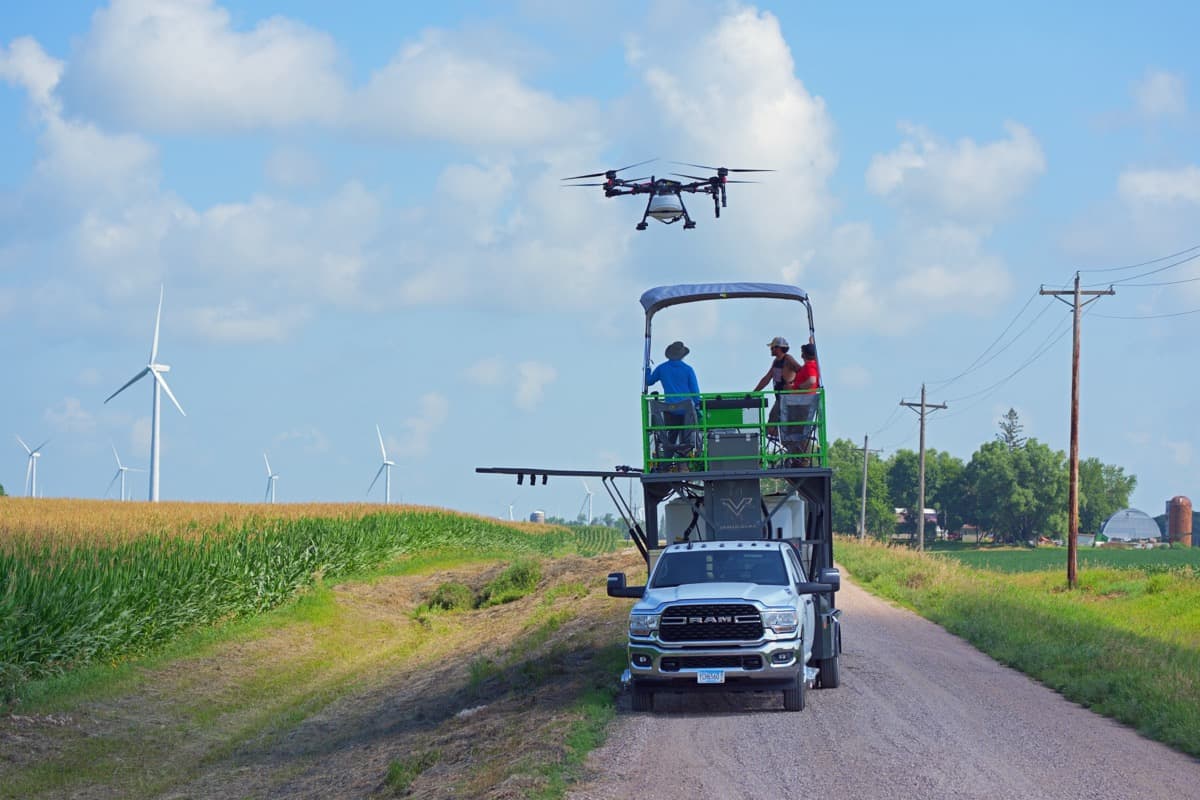
Standing out of the sun under a canopy that looks like it was borrowed from a reservoir fishing boat, the men fly the drone until its diminutive supply of spray is depleted. The whirring beast returns to the truck and lands on a pad. A tankful of juice later, the machine whips out to the corn where it left off, and resumes its work. This field presents some obstacles, like a giant power windmill, standing still and stout. The drone handily zips on either side of the huge white column holding the windmill’s propeller.
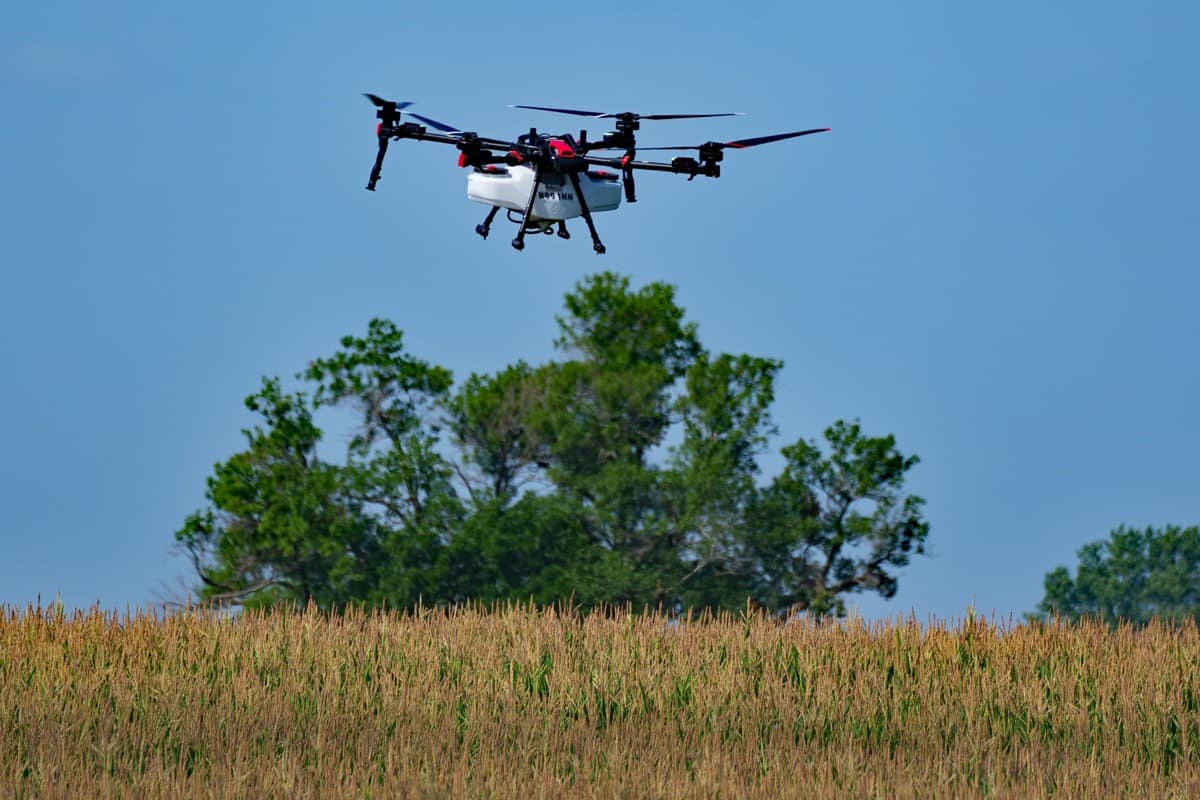
This cornfield looks like the model example for using a drone effectively. Larger, wide-open spaces may still be the domain of turbine-powered crop dusters.
I’m not the only curious watcher of this flying technology. A couple others have stopped off the gravel road to see what’s going on. I wave at the men on the deck of their drone truck and continue east.
By the time I reach Tomah, Wisconsin, the smoke from the Canadian wildfires is choking, and driving with lights on is advised. Canada is ablaze, and the smoke is blowing southeast across the Midwest and into New York. Will visibility — and breathability — inhibit arrivals at Wittman Regional Airport (KOSH) for AirVenture or will rumors of rain scrub the skies clean in time?
Friday, July 17
Skies are clearer this morning. Time for the last dash across Wisconsin to Oshkosh.

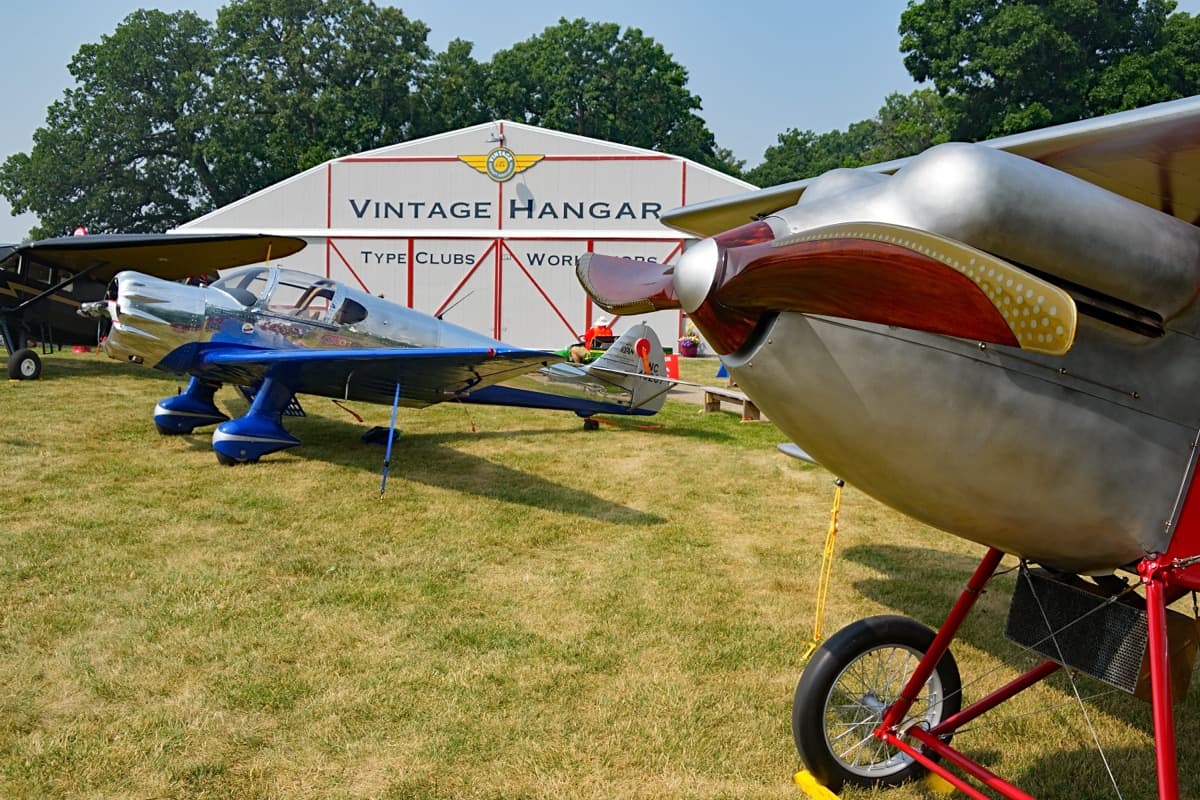
I arrive to a smoke-socked-in airfield. In the early afternoon, it clears enough to allow a stream of VFR fliers to bring a variety of flying machines to AirVenture.
I plan a different route home that will take me to the Spirit Engineering factory in Grand Junction, Colorado, makers of the Spirit light sport aircraft that company officials brag sells for the price of a pickup truck. So, that sets me thinking: Replace my 459,000-mile truck with a new truck or a new airplane?
But for now it’s Show Time!
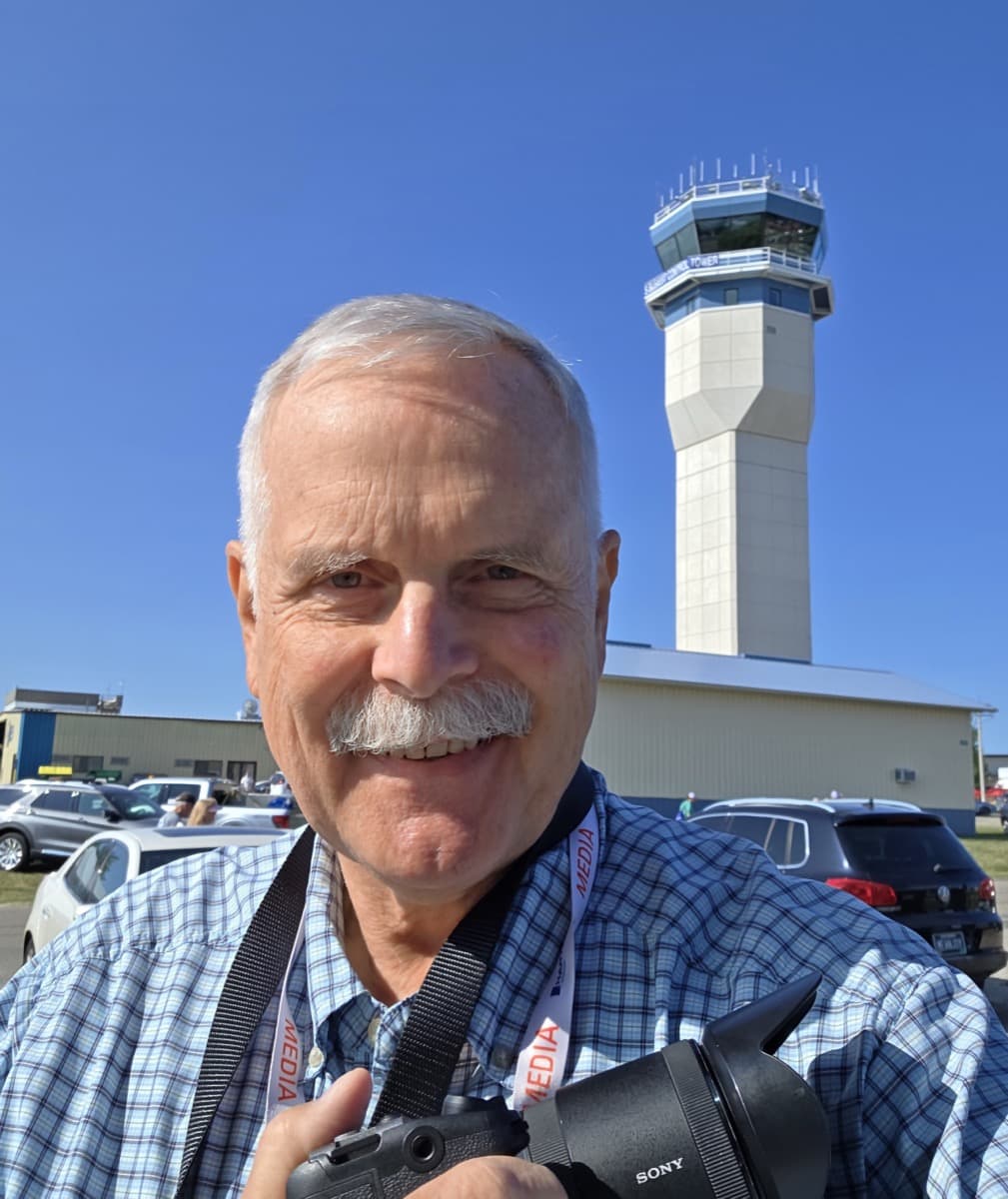
Look for Fred’s stories on the shows in upcoming posts on General Aviation News.

Thanks for taking us along Fred. I really enjoyed this article and pix.
You are welcome. This stuff is fun!
Very enjoyable reading.
I’ve only been going to Oshkosh for a few years, flying commercial into MKE and tent camping, but would like to do a longer road trip or slow airplane hopping trip one of these days.
Thanks! I hope you get your opportunity for a longer en route adventure to Oshkosh.
I enjoyed reading your story, well written and interesting. Thanks for sharing.
You are very welcome!
Thanks for the roadtrip!
My pleasure! There’s a lot of fun to be had in en route adventures.