

The pilot reported that before departing for the 508-nautical-mile cross-country flight, he had a total of 38 gallons of fuel on board the RV-6A.
After departing his home airport, he climbed to 11,000 feet mean sea level (MSL) and was flying “VFR on top.”
While at 11,000 feet, he requested radar vectors around some weather from air traffic control. At the same time, he noticed that his fuel consumption was much higher than he had anticipated. He then asked ATC for radar vectors to the nearest airport.
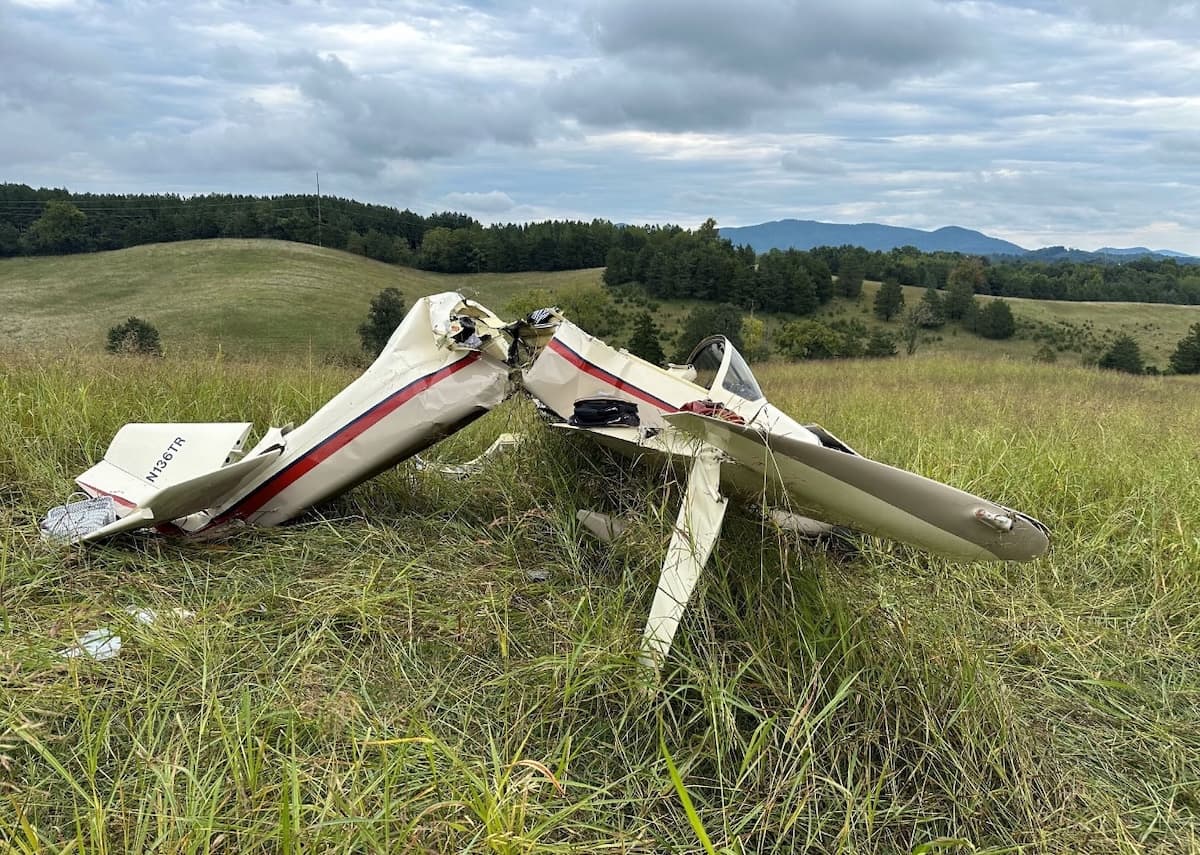
The pilot told investigators the airplane “ran out of fuel” about seven miles from the diversion airport. He performed a forced landing in a field near Trinity, Virginia, resulting in substantial damage to the airplane’s fuselage and wings.
The pilot sustained minor injuries in the crash, while his passenger sustained serious injuries.
A post-accident examination of the wreckage by an FAA inspector revealed that both wing fuel tanks were absent of fuel and there was no evidence of a fuel leak.
Probable Cause: The pilots’ improper in-flight fuel management, which resulted in a total loss of engine power due to fuel exhaustion.
To download the final report. Click here. This will trigger a PDF download to your device.
This September 2024 accident report is provided by the National Transportation Safety Board. Published as an educational tool, it is intended to help pilots learn from the misfortunes of others.
I have never understood many things in my life and this is one. The plane owner has many thousands of dollars in buying airplane, licences, training, servicing, he has nothing between his butt and a few thousand feet of major hurt and then tries to fly with less than full tanks. What is the logic?
I would appreciate some bright person explaining that to me?
Say this every time it happens! Pilot should lose their license and if they want to fly again, they have to take their check rides all over again. Running out of gas is plain stupid! You have fuel gages, simple math, fuel flow gages. Mistakes happen, but this deserves extreme punishment.