

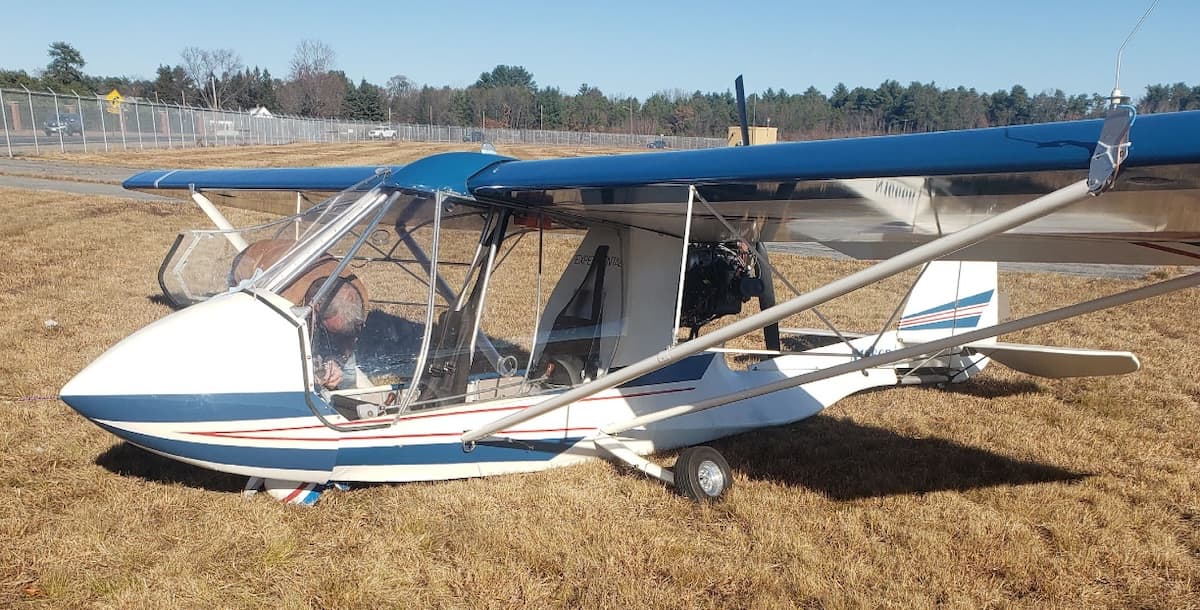
The pilot and owner of the recently purchased experimental amateur-built Challenger II told NTSB investigators that as he maneuvered the airplane in a left crosswind turn near the airport in Concord, New Hampshire, the gullwing-style cabin door opened, “creating significant noise and buffeting that affected aircraft stability and directional control.”
He attempted to secure the door and stabilize the airplane, but it continued in a left descending turn that he could not arrest. He ultimately reduced power and completed a “mushing stall to ground contact” that resulted in no injury to himself, but substantial damage to the airframe.
A conversation with the airplane kit manufacturer revealed that the airplane was controllable with a door open in flight. He said the airplane required vigilance and proper use of the rudder to maintain coordinated flight and added that those transitioning from production airplanes benefitted from “differences training” because of the design and function of the pedals.
An FAA inspector inspected the doors on the airplane and found that they closed and locked securely, and he confirmed flight control continuity. In a conversation with the pilot after the inspection, the pilot volunteered that there was nothing wrong with the flight controls of the airplane and that he “may have overcontrolled the aircraft while trying to close the door,” which resulted in the hard landing.
Probable Cause: The pilot’s failure to maintain directional control and eventual stall/mush of the airplane while trying to secure an open door in flight.
To download the final report. Click here. This will trigger a PDF download to your device.
This November 2024 accident report is provided by the National Transportation Safety Board. Published as an educational tool, it is intended to help pilots learn from the misfortunes of others.
Leave a Reply